Registration is now open! This year’s event is…
Registration opened on March 10!
Regardless of nationality, residents of Japan are eligible for a discount. The early bird deadline is April 30, and the standard entry deadline is June 15.
We will accept late entries until June 30 for those who realize they forgot to enter after the standard entry deadline, but a significant surcharge will apply.
International participants are charged a flat rate regardless of nationality or date of application.
looking back at DTJ 2025
The weather wasn’t just rainy—it was “severe.”
We often see phrases like “rain or shine” or “cancelled in severe weather” in event brochures. However, last year’s race took place amid strong winds that had been raging since the day before. Although I considered canceling, we decided to proceed by avoiding high-risk mountainous areas.
As a result, although we were able to run the event safely, the course had lost much of its identity as part of the “Daisetsuzan” range. I believe the participating runners were left with a strong sense of unfulfillment. Although the weather is beyond human control, we regret our inability to provide our participants with sufficient value and satisfaction.

We aim to make the 2026 event one that leaves no regrets
While we can only pray for good weather, we’re preparing for DTJ 2026 by improving areas that fell short in previous years. Our goal is to welcome runners with an even better event!
We also believe that additional safety measures are necessary to give participants peace of mind.
Last year, news of bears venturing into populated areas made headlines in both Hokkaido and Honshu. We vividly remember the tragic brown bear attack in Hokkaido, as well as the significant threat posed by Asian black bear incursions in the Tohoku region.
Shirataki, in Engaru Town—the event venue—is an area where brown bear sightings are a common part of daily life. Although there have been no human casualties from bears in this area, the bear population is certainly increasing across Hokkaido, leading to more frequent encounters. This year more than ever, we believe that event organizers will need to prepare for unexpected encounters with brown bears.
Proper course maintenance is important, but adequate preparation to prevent encounters will likely require cooperation from all participants. For instance, we have always required participants to carry bear bells; however, it will likely become necessary to ensure a full understanding of high-risk situations and behaviors and to establish basic running principles based on that understanding.
This is not just an issue for trail running. As bear encounters become more common, it will become common sense to be prepared for them, not only for regular hiking, but also for other outdoor activities, such as camping, as of 2026.
We hope to create a framework in which participating in this event serves as a gateway to naturally learning these skills. We will release this information to participants once preparations are further along.
What’s different and what’s the same about DTJ 2026?
Here’s the different!
- All races are now solo competitions!
-
While there were pair and relay events in 2025, all events this year are solo, just like in 2024 and earlier. Of course, it’s perfectly fine for multiple solo participants to run together.
- The entry deadline is a bit earlier this year!
-
In previous years, the deadline was one month before the event date. This year, the deadline is a bit earlier: June 15. We will accept entries until June 30, but the fee will be significantly higher than the standard rate. Please be sure not to miss the deadline! Also, an early bird discount is available until April 30, so if you know your schedule, it’s best to enter early.
- The time allowance for walking sections will be extended, and the time limit for CP4 (Ninosawa Ridge CP) is likely to be extended
-
The year before last, average trail runners were unable to complete the walking sections at a normal pace within 30 minutes (though there was an error on the part of the organizers regarding the exit of the walking sections the year before last…). Therefore, we expect to extend the time allowance so that participants can proceed more carefully through the Special Protection Zone (Strictly Protected Landscape Area) without rushing. Consequently, passing through CP4 will be more difficult, so we plan to relax the time limit for CP4. As of March 28, we have tentatively pushed the cutoff time back by 10 minutes, but further adjustments may be necessary.
Here’s the same!
- The distance categories are the same!
-
There are three categories: 15 km, 40 km, and 60 km. As with the 2025 event, there will be no kids’ category this year.
- The course is the same!
-
While there will be some layout changes near the start/finish area and minor route adjustments, the basic course will remain the same for all categories. Since passing through the finish gate in the opposite direction caused confusion in each category last year, we plan to standardize it for all categories.
- The aid station locations are the same!
-
Aid stations will be set up at the same locations as in the 2023 and 2024 events. We plan to make the offerings more substantial, but the details are still being decided.
- There will also be mandatory gear requirements!
-
Although this event’s course difficulty has not been officially rated under the Daisetsuzan Grading System, Ministry of the Environment officials have judged the Hirayama Ridge section included in the 40 km/60 km courses to be equivalent to Grade 4 or higher. Depending on the weather, strong winds are common, and since there are no escape routes along the way, advance risk management is extremely important.
Each participant must be prepared for sudden weather changes, potential difficulties, and bear encounters. For instance, every year, some participants attempt to join wearing rain gear intended for everyday use rather than mountaineering-grade rainwear. This is tantamount to suicide and cannot be tolerated. While we understand the desire to run as lightly and freely as possible, we have established these requirements to ensure participant safety.
The list is expected to be similar to that of last year’s event. Please refer to the Rules page. Failure to carry the required equipment may result in penalties, including disqualification. “Preparing something you’ll only use 90% of the time” does not mean “you don’t need to prepare it.” Mandatory gear is not something you can omit based on personal judgment. It is an eligibility requirement under the rules.
- We’re organizing a bus tour!
-
Last year, we organized a bus tour that departed from and returned to Asahikawa, which included an overnight stay at the venue. We are planning a similar tour for this year. Currently, we are planning a tour that departs from and returns to Asahikawa and includes an overnight stay. However, details are still being finalized. We expect to have more information ready by the end of April.
What we want to prioritize at this event is
Don’t let it end with just “That was fun!”
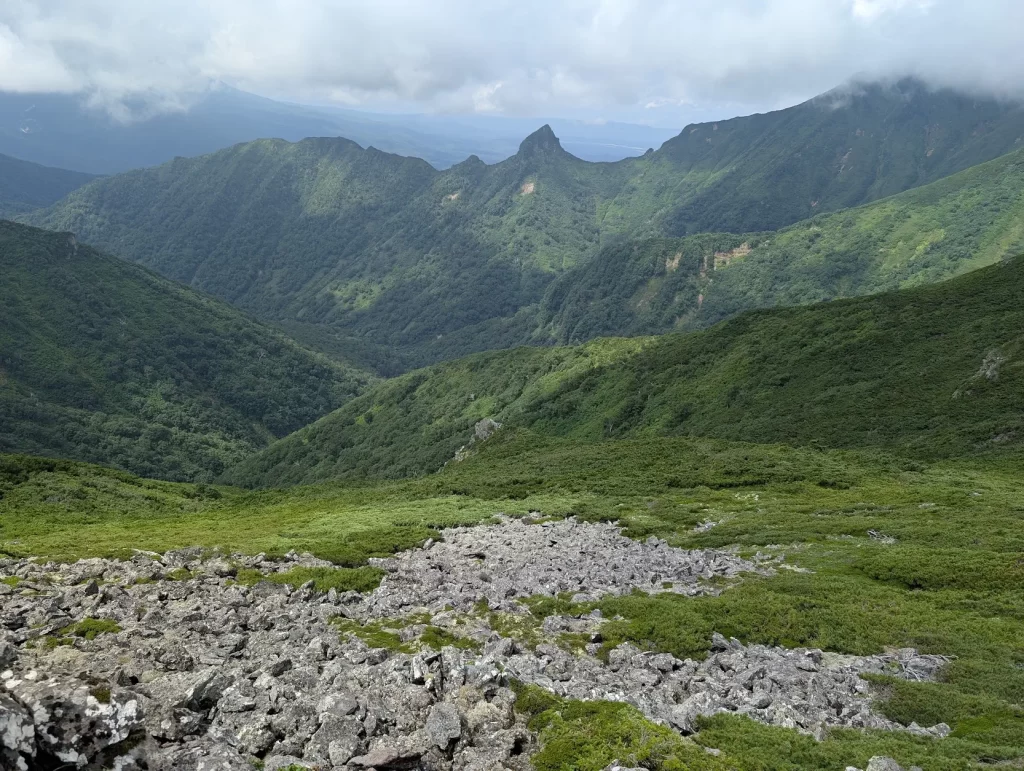
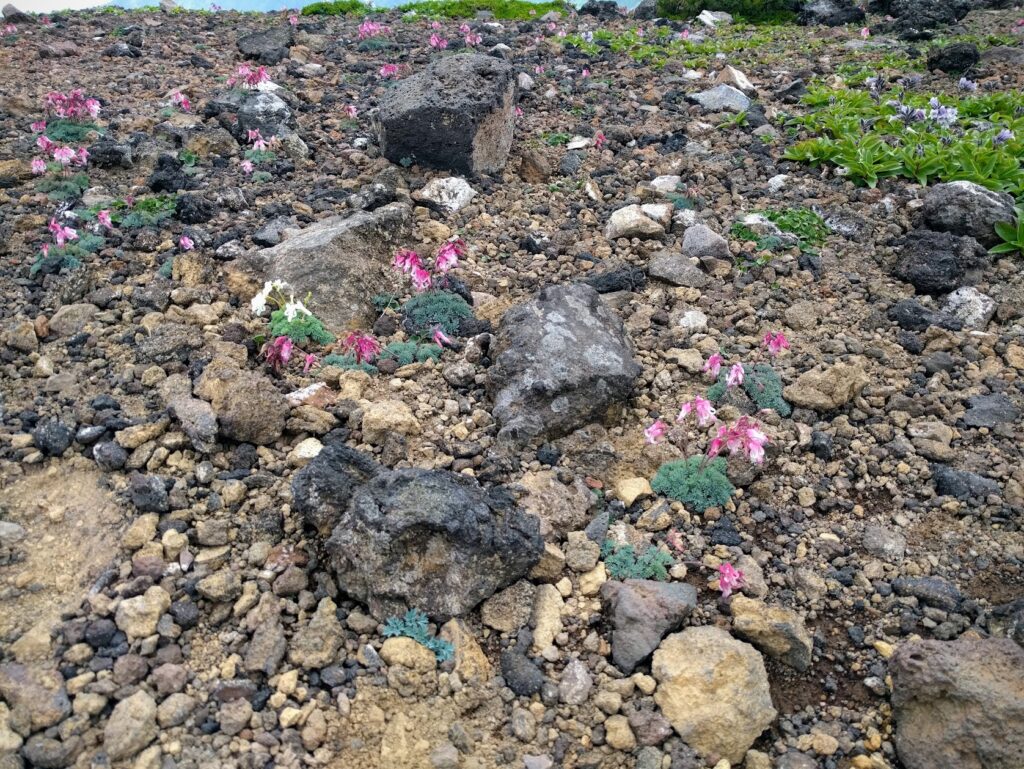
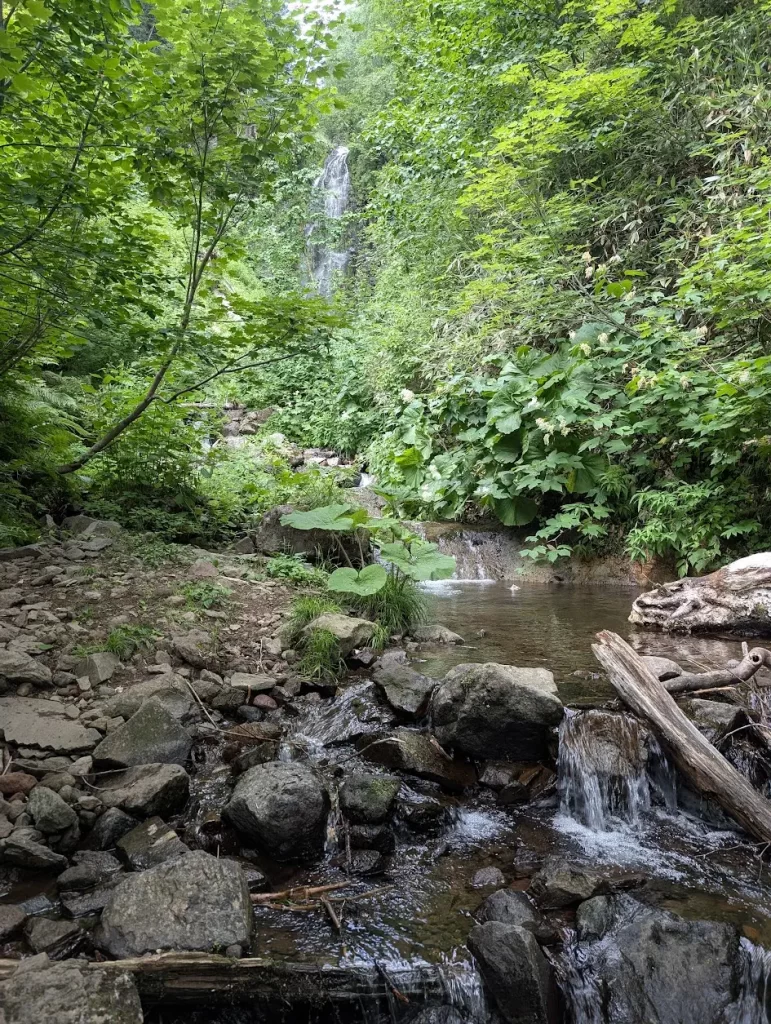
I imagine that, after climbing all the way up from the Hirayama trail, many runners will be left breathless by the view when they reach the Hirayama ridge. While the distant views are magnificent, simply following the narrow path winding through the natural landscape at your feet is a special experience in itself. Once you’ve climbed to the ridge on foot and completed your journey back to the starting point, I guarantee you’ll think, “It was tough, but what a great trip! I had so much fun!’
So, I’d like you to think about something for a moment.
The reason you can take this journey today is because people have cleared a path through nature. The reason you can experience untouched nature is because people have made efforts to coexist with it without damaging it. Those who travel through these areas must not damage them; they have a duty to preserve them for future generations.
The runners participating in this event are among those travellers. As organisers, our aim is not just to let you enjoy the course, but also to encourage you to reflect on the natural environment and the relationship between people and nature. It would be fantastic if holding this event could contribute to trail maintenance and nature conservation! That is our secret ambition.
Our aim is to preserve the vibrancy of our local community.
This situation seems to be largely due to the historical background of the tournament, but there hasn’t been much interaction with the local communities of Engaru and Shirataki in recent years. It’s a shame that even participants who travelled from far away didn’t have many opportunities to explore the local area.
It’s true that it’s not a big town and that Shirataki is a small hamlet within it.
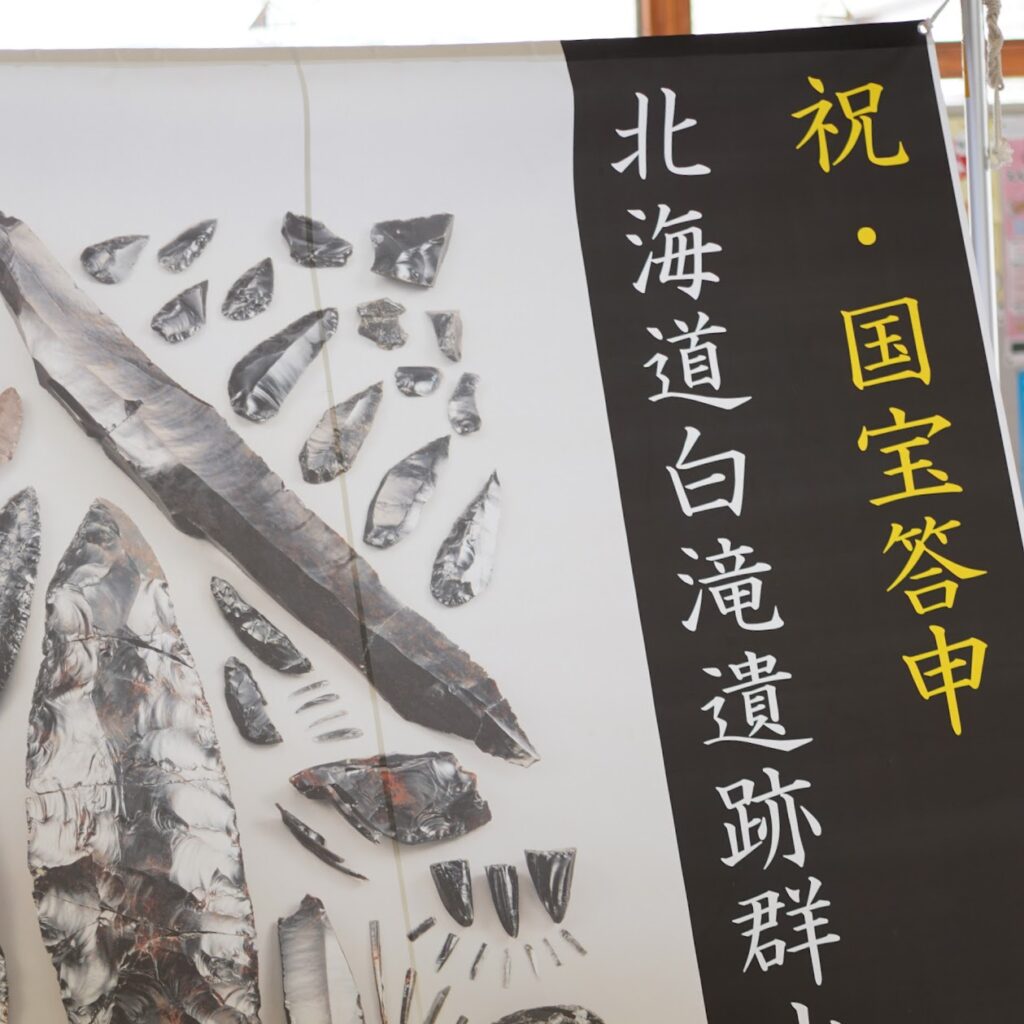
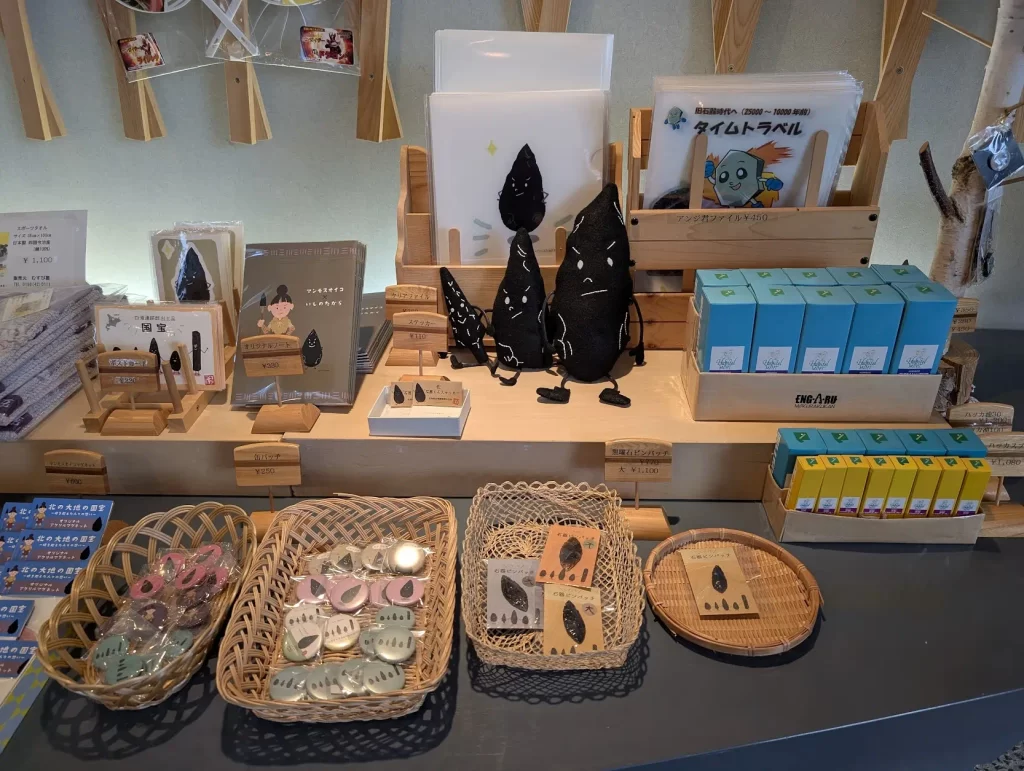
But did you know that this town is home to a National Treasure? A National Treasure, mind you! There are also locally produced canned goods that are quietly gaining fame, not to mention farmers with a unique twist. It would be a shame to come all this way and not know about them! There are all sorts of things like that. We want people to learn about them, and we hope to incorporate them in some way to make the venue more lively.
Finally, let me summarise the main attractions of this tournament.
- The Daisetsuzan Trail Journey is Hokkaido’s only mountain trail running event, taking place in the Daisetsuzan mountain range.
-
Although there are trail running races held at ski resorts in Hokkaido, races in high-altitude mountain regions are extremely rare (perhaps this is the only one?). Furthermore, no other trail running events include the Daisetsuzan range in their route.
- The course includes the Daisetsuzan Special Protection Area, where you can experience rare and untouched nature that has been preserved by local people.
-
The area along the ridgeline from Hirayama to Mt. Bunsan has been designated a “Special Protection Zone,” which is the highest level of protection. The area’s scenery, including the alpine plant life that can only thrive in such an environment, is a true representation of Hokkaido’s ancient natural landscape.
- The journey begins and ends in Shirataki, a place steeped in ancient history.
-
The event venue is located in Shirataki, Engaru Town, an “ancient land” where Paleolithic-era ruins remain.
The “Artifacts Excavated from the Hokkaido Shirataki Site Complex,” which consists of stone tools such as obsidian unearthed in the area, was designated a National Treasure in 2023. (Shirataki Geopark Promotion Council)Perhaps the race course follows the same path ancient people walked tens of thousands of years ago.
Welcome to Shirataki, a place brimming with romance! - Daisetsuzan is not the only highlight; Tengudaira, which is located near the start and finish lines, is another.
-
The venue is located in a mountainous basin. This plateau, known as “Tengudaira,” is located at an elevation of around 600 meters and features flat land and rolling hills. Today, vast farmland stretches across the landscape, and the scenery is well worth seeing. There is also an observation deck overlooking the area located near the race venue.
For runners participating in the 60 km race, the early morning view of Tengudaira might be a reward for getting up early. They’ll run through a golden plain bathed in the morning sun, with distant mountain ranges shrouded in mist. Stoic runners who seek mountains might feel that running across the plain is a waste of time, but I hope you’ll take a moment to enjoy the unique scenery.
- We respect and welcome all runners enjoying this journey.
-
Watching elite runners with their well-trained bodies effortlessly sprint along rugged mountain trails inspires me and shows me the infinite potential of the human spirit. While we respect them, this event isn’t just for them.
It takes you on a journey through remote, unspoiled areas of Hokkaido, where the region’s ancient natural beauty remains intact. We welcome all runners who wish to explore the great outdoors—places they might not normally visit—by following in the footsteps of those who came before them. Although participants will be ranked based on their completion times, we respect everyone who takes part in this journey through Hokkaido’s natural landscapes, regardless of their ranking or whether they reach the finish line.
We especially hope that trail runners, outdoor enthusiasts, and road runners who love the mountains will come experience this event for themselves. We look forward to your challenge!